
The Million-Dollar Goat
What Seven-Year-Old Alma Knows about Thomas Cole and Early American Art

To celebrate the New Year, I plan to publish, for everyone, a series of pieces on beauty, “ever ancient, ever new”; that is, a series of essays on how surprisingly new ancient art can feel, but also essays on living artists who have something of the spiritual power and gravity of antiquity. But for this week, I wanted to publish this as a “thank you” to my supporters.
Taking a break from eating and watching football over Christmas vacation, my wife and I took the kids to the Crystal Bridges museum in Bentonville, AR, an ambitious cultural project funded by a branch of the Walton family:
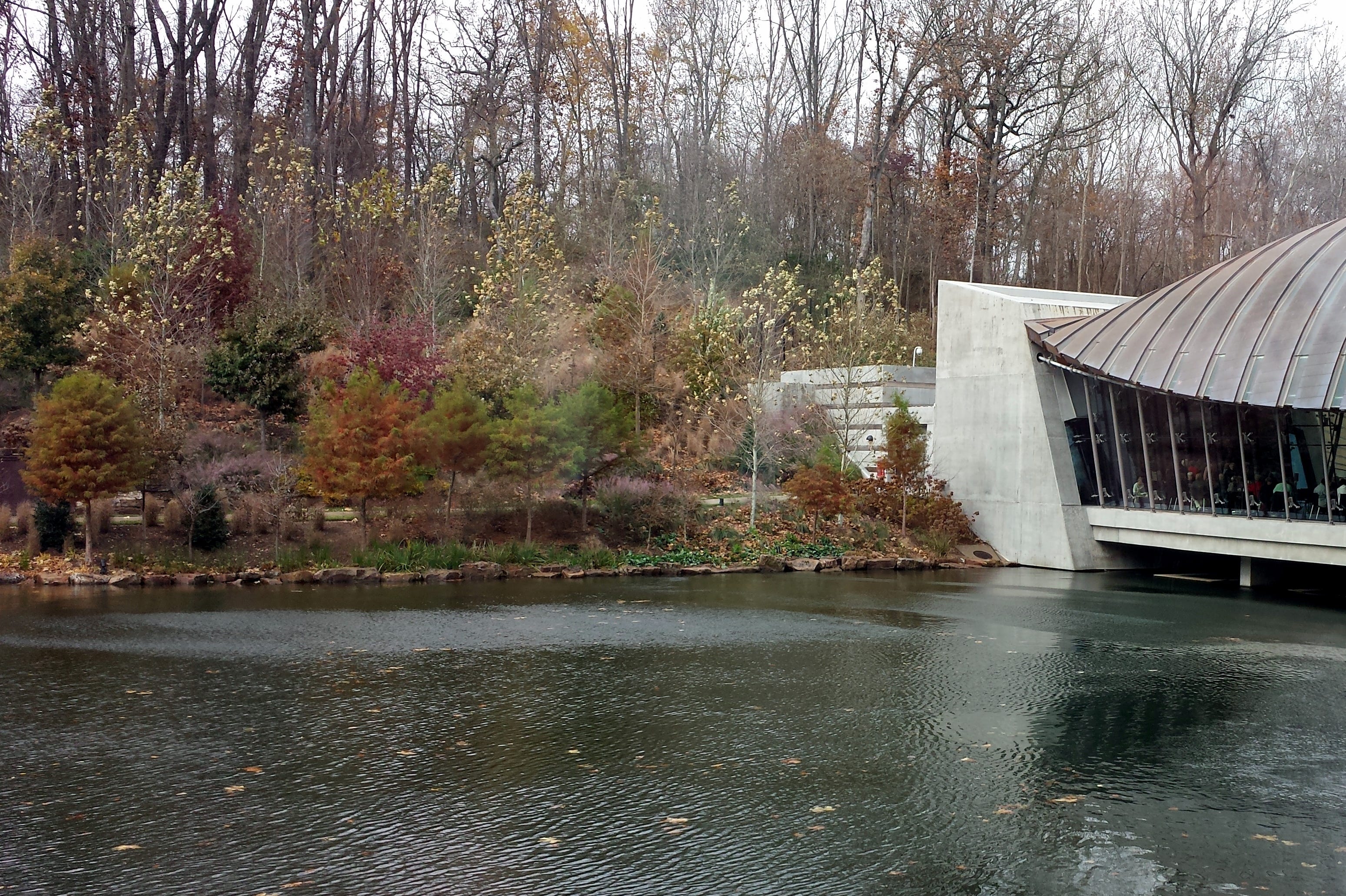
I have ambiguous feelings about this place, in general, and ambiguous feelings about the architecture, in particular.
Is this an architectural wonder, which blends the man-made and the natural? It’s nestled in a wooded valley in the Ozark Mountains and centered around a lake:
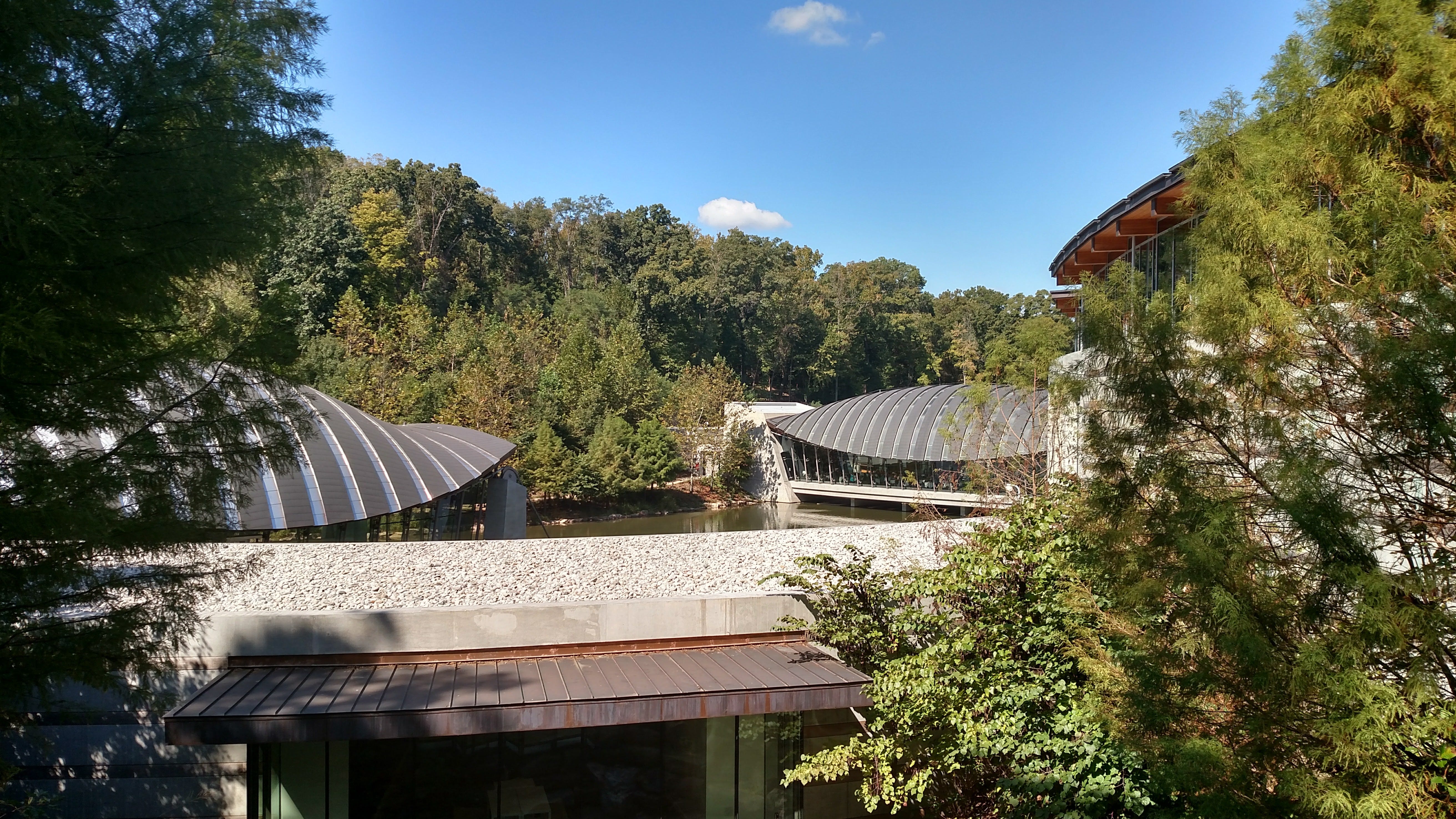
Or is this the most perfect symbol of the dominance of the Machine over the natural world you’ve yet come across? I hope you’ll tell me what you think.
But, meanwhile, inside, there are glimpses of unspoiled nature. As in Thomas Cole’s View of Mt. Etna…
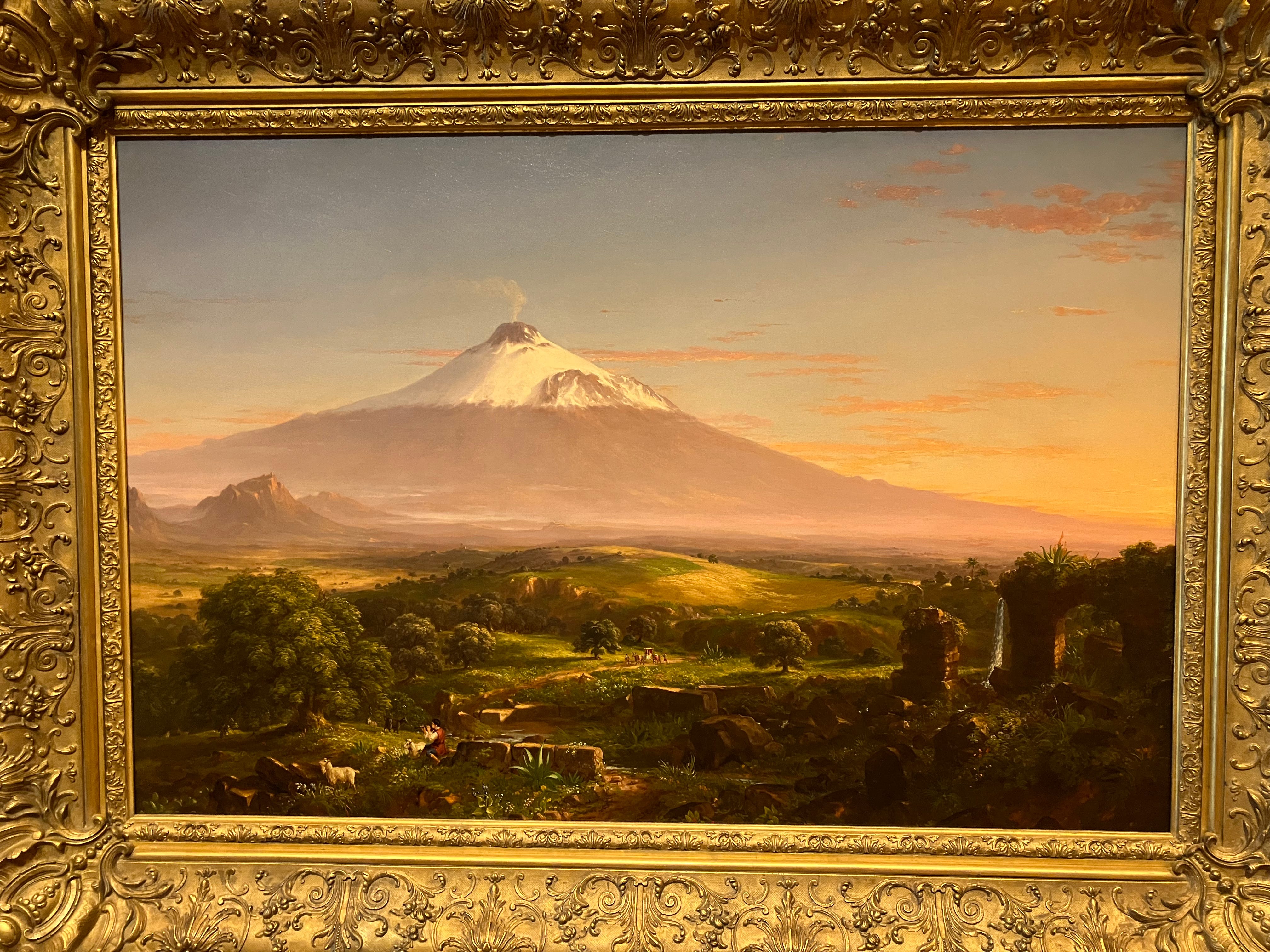
In which he lovingly painted the very leaves on trees and individual blades of grass, as well as the clumps of hair on the shaggy goat in the foreground…
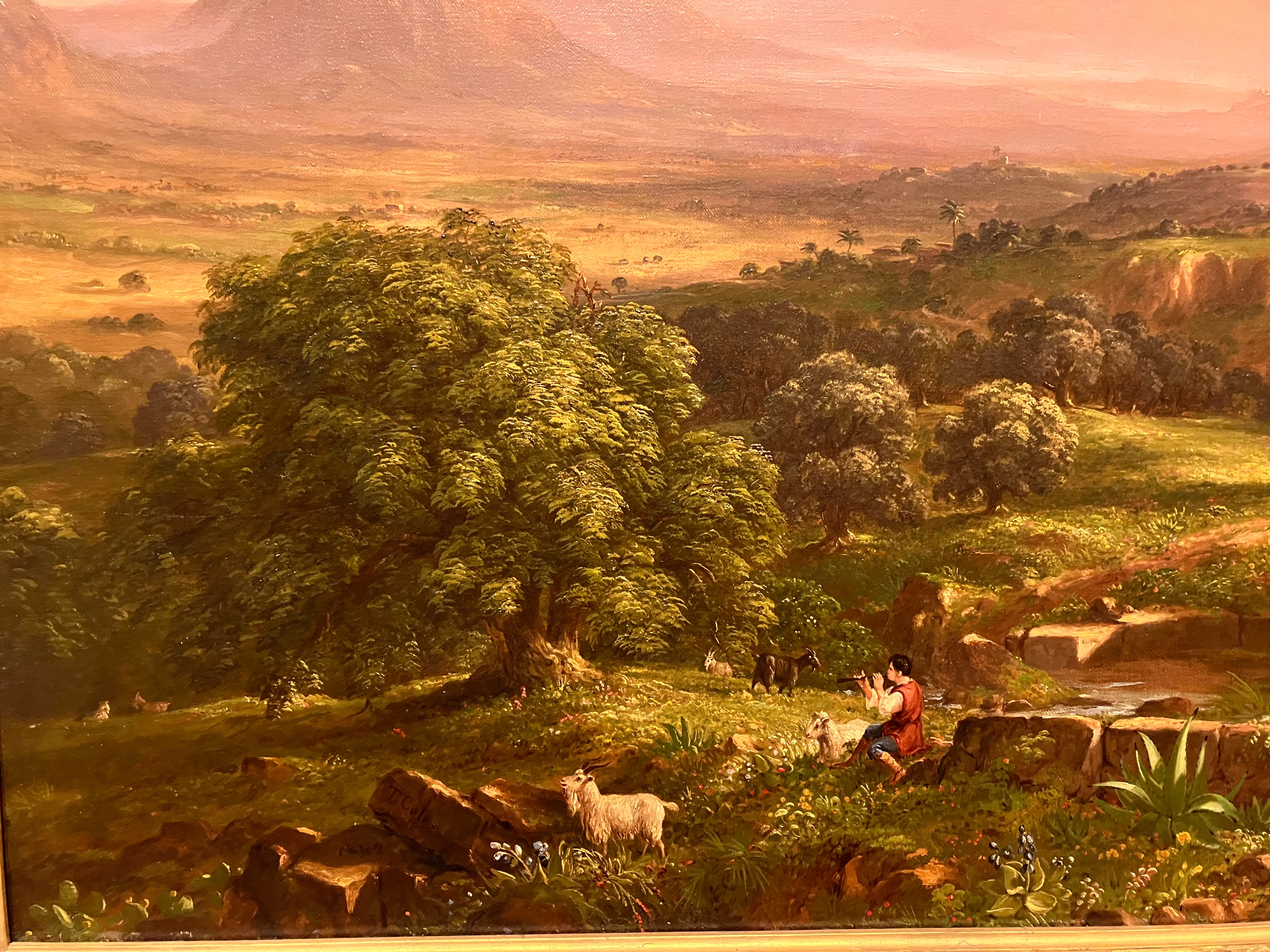
Here are some of the details as your eye moves across the canvas (watch it on mute unless you want to hear my baby screaming)...
How paradoxical.
The world’s largest retail chain, whose stores are warehouse storage facilities, made up of aisles that customers are allowed to roam through; the chain that has surrounded each of those “storage facilities” with oceanic parking lots (how many acres of nature have been dedicated to creating parking in potentia?); is now the keeper of unspoiled America.
Meanwhile, there are the obligatory Up-To-Date Pieces…
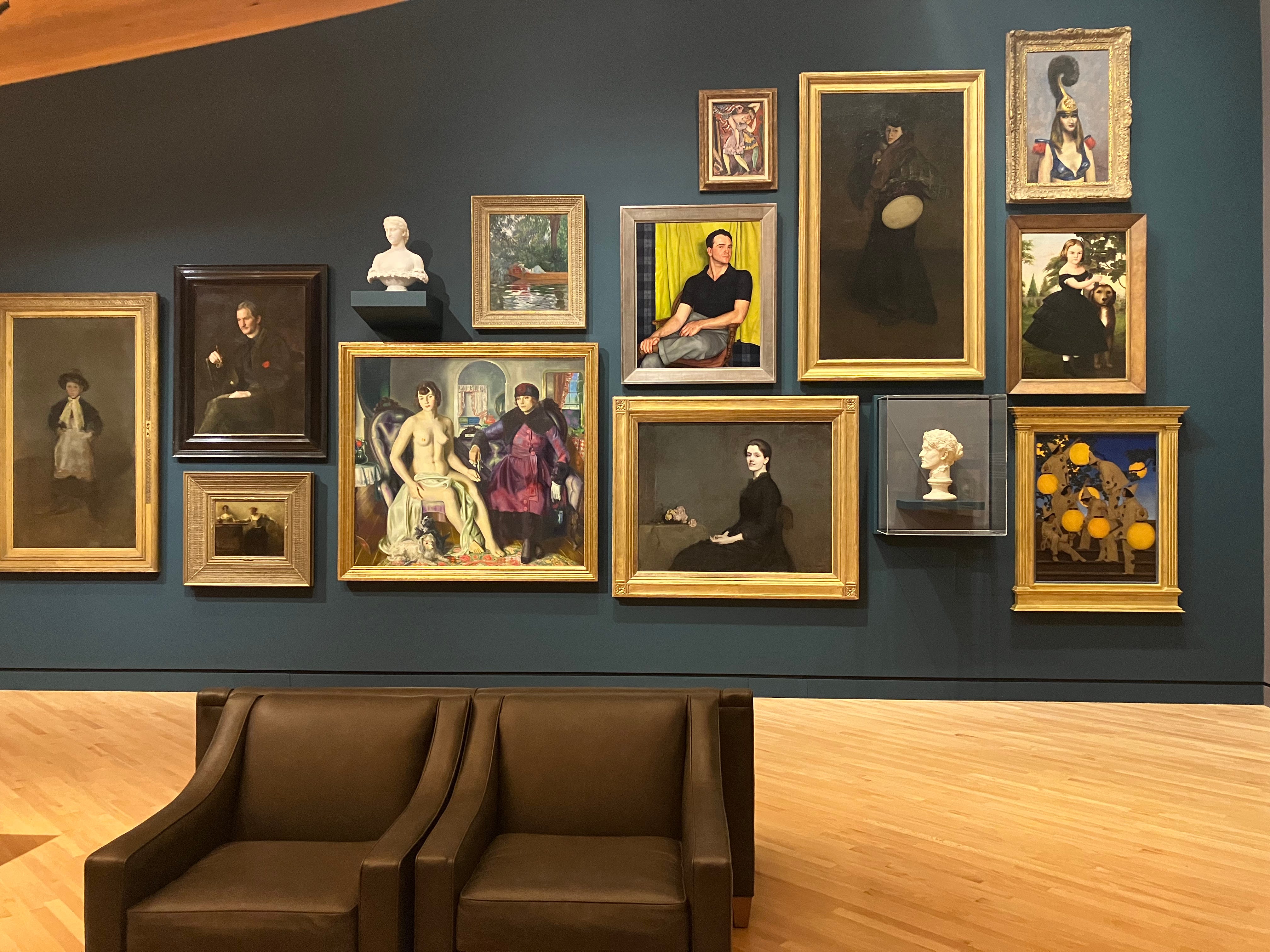
But the heart of the museum is still made up of what you would expect pre-woke Waltons to treasure: Thomas Cole and the Hudson River School.
And nothing else rises to the level of the early American pieces.
This is painting under the influence of Romanticism and Transcendentalism.
This is America, before it had to be made great again.
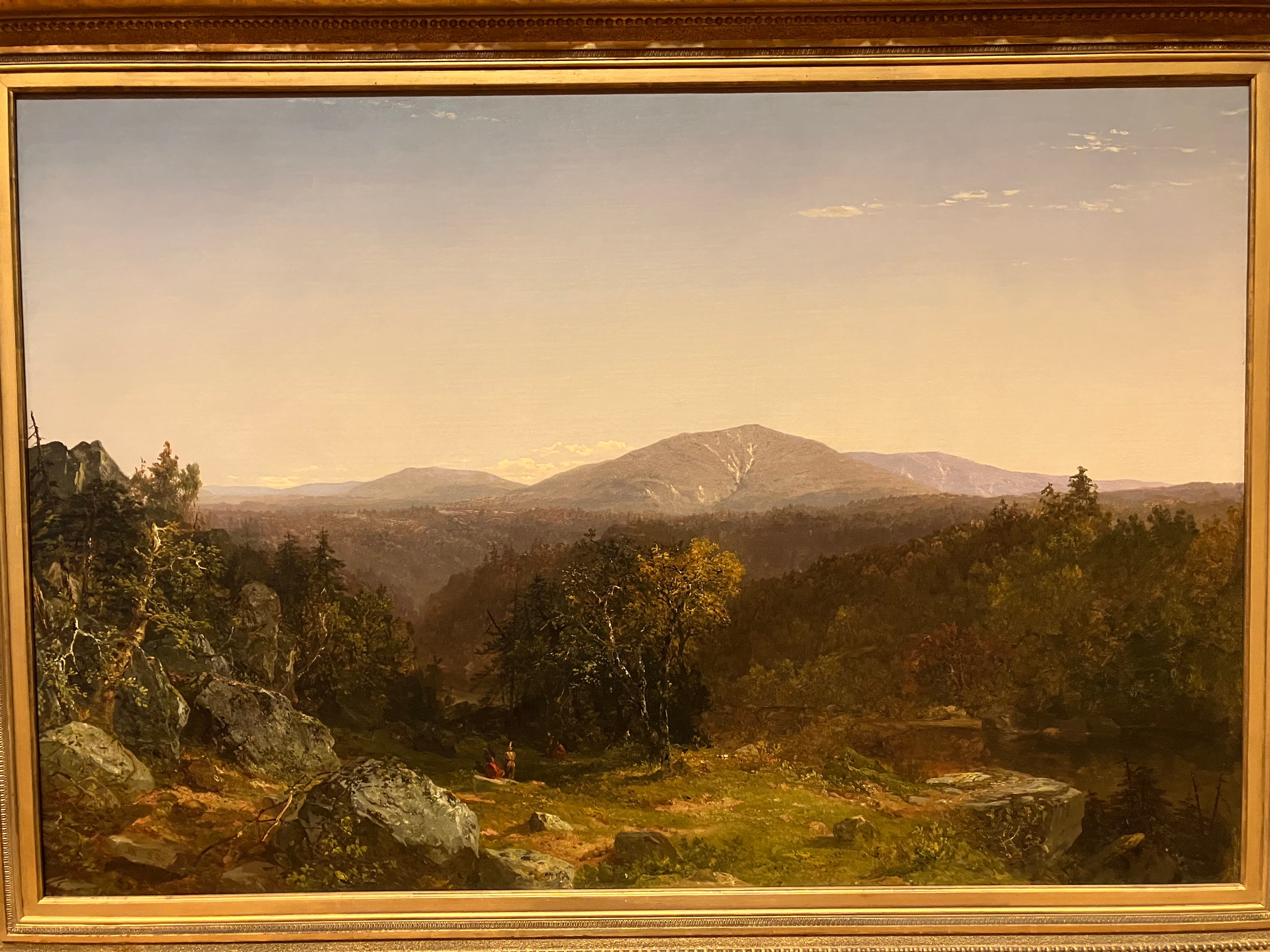
Unlike the modern environmentalist movement, these painters and natural philosophers did not think that human beings were a blight on the natural world. Rather, the natural world was a “call,” as my friend Dwight Lindley put it in a lecture he gave to Benedictine College last fall, a spiritual “call” that can be responded to through human creativity, a creativity that looks, listens, remains still, and then tries to pull out a response of creativity from my own psychic depths. As the placard explains: “This painting of Mt Washington in New Hampshire, while stunning, is an artistic fiction.” Exactly.
It is, you could say, a natural landscape turned into a hymn.
At one point in my visit, I was standing in front of the painting above John Frederick Kensett’s 1852 View of Mt Washington (pictured immediately above), with that peculiar feeling of regret I’ve experienced before in the presence of beauty, the very sentiment that makes up the soundtrack of Why Literature Still Matters.
On the one hand, you feel this magnetic pull. You don’t want to go. You want to go on listening or looking, forever. I wanted to keep looking at this autumnal light, dwell within the painting, like the figures in the foreground do.
But even while you are looking at the painting or the landscape or hearing the symphony, the practical concerns are pulling you away. You know, very soon, you’ll have to stop. Before you finish downloading. In my case, the baby was crying, the kids were hungry, and my football-obsessed twelve-year-old was being pushy about getting back home so we could watch the game. I felt all this temporal, mundane pressure hanging on me. I felt, preemptively, the pain of being divorced from beauty, before I had gotten it into me.
I am convinced that this is why it takes Beethoven almost 120 seconds just to end his Fifth Symphony, even in John Eliot Gardner’s lightning-tempo interpretation (Listen: Beethoven could have finished it off at 31:08). It’s also why it takes three minutes for a soprano (and trumpet) to enunciate all of the syllables of “E-TER-NAL” (as in Handel’s “Eternal Source of Light Divine”). Purcell, too, engages in a war against time in his “Music for a While”: he’s trying to get time to bend back on itself, to slow down, to be more like eternity. In the Russian theologian, Pavel Florensky, this is the essence of “iconic dreaming”: when chronos is transformed into kairos (from John McGuckin’s “Florensky and Iconic Dreaming,” in Alter Icons). It’s also the impulse behind Josquin Desprez’s meditation on grief and loss. (I’m full of questions today: I need a real, live musicologist to tell me if Bjorn Schmelzer’s interpretation has any historical grounding. Don’t you wish there were an Early Modern Music Hotline? I’d be willing to dial a 1-900 number to talk to someone.)
What is more, as I’ve also written about recently, it is this sensation that Lewis said was the inner core of myth. And I also think it’s what drove my seven-year-old to nearly get us arrested.
