
American Apocalypse
Getting robbed in Florida while looking for the water of life

On a late-June day, during a very hot summer, without a cell phone and without Google maps, I got into my stick-shift Toyota Camry and drove across the American South, from Little Rock, Arkansas, to Jacksonville, Florida. I was eighteen. My friend, Bill, played on a baseball team at a tiny college in Arkansas. Every year his coaches would take their players down to Florida to sell fireworks over the three lucrative weeks leading up to the Fourth of July. It would be hot and it would be hard, and yet, Bill promised me in glowing terms, we would come home with piles and piles of cash.
I probably should have asked for more details.
The day before my departure, fired by these dreams of mountains of money, I pulled out my atlas and breezily traced out a route with my finger over the paper. The following day I started driving, following, kind of, sort of, my chosen route, by going generally and generically in the right directions—a little east and a little south, right? I only took country highways so I could see and feel the world. I would drive a couple of hours, until I got lost, and then try to figure out where I was on my atlas. Or I might stop and ask someone for help. Sometimes I would stop to check out something interesting (a pecan stand or BBQ shack). I can’t remember how long my journey took me—days? weeks?—but I do know that my route through kudzu country was not very efficient, because I somehow ended up in Mount Olive, Mississippi, (do a Google maps search for Little Rock to Jacksonville and you’ll wonder what I was doing, too). Just outside of Mt. Olive, MS, on the side of a hot-summer, southern highway, I found an unassuming building. There was a sign out front: Mount Olive Tape Library. Even now as I write its name, two decades later, I feel the old fire of the thrilling discovery. It was a huge, analog Audible, but for Reformed theology; a building full cassette tapes of famous Protestant preachers. And because I was eighteen, I was capable of entering into serious contractual obligations: I solemnly filled out the paperwork, like one undertaking a rite of manhood, and, once I had been admitted into the fellowship of the Mount Olive Tape Library, I checked out the maximum number of cassettes allowed.
From there on, by some miracle—given that I am severely navigationally challenged— I eventually made it to Jacksonville. I listened to my tapes the whole way.
Over the next three weeks, during the days, I sold fireworks. The tent assigned to me and my partner, a lazy Canadian named Louis, was set up in a parking lot somewhere in suburban Jacksonville. The parking lot stood in front of an unemployment office, as well as one of those liquor stores that has bars on the windows and a flashing neon sign: “Cheap Cigarettes! Discounted Booze!” Perfect. All day long, various weathered people, down on their luck, would come out of the unemployment office, walk next door, then come over to our tent with brown bags in hand. They wanted to talk to us, buy from us, or steal from us. In another age, they could have been characters in Treasure Island. One day, two men came up to beg. The tall man explained that his friend, the short man, was mute, but that he, the tall man, fortunately understood sign language. The short man, sitting in his wheel chair, performed wild gesticulations with hands and great looping motions with his arms, in a sad and unconvincing mimicry of sign language. The tall man “interpreted” the short man’s sad story, a tale that concluded with a request for cash. The only problem was that they had forgotten they had come during the previous week. However, back then, the short man still had the use of language.
On another occasion, a grizzled, sun-baked vet came by to shoot the breeze. Over the course of that tedious and profanity-laced conversation, this vain and violent man, smoking cigarette after cigarette inside our tent of fireworks despite our protests (“Ah, it don’t matter…”), revealed to us the details of his broken relationships, using special names to describe his ex-wives and ex-girlfriends. He also boasted that, for a living, he stole weapons from a nearby military base, selling assault rifles, grenades, and anti-aircraft missiles on the Florida black market.
How long was this man going to talk to us, I wondered, as he lit another cigarette?
And where was I, anyway? In a Mark Twain novel? In prison? In hell?
And now that I have teenagers, I wonder: Mom, what were you thinking?
The baseball coaches, who had had thought of everything, asked us to act as security guards after the tents closed for business. And so, on my nights on, I would sleep in my car, parked inside the tent, to “guard” our merchandise (I slept with my hand wrapped around the ignition key, inside my pocket, ready to drive away if thieves came by). Even at night that summer, it didn’t drop below ninety degrees, as that sun-baked parking lot exhaled the heat it had absorbed by day. Thus, I had to leave the windows down, at least a little bit, to keep from suffocating. On the other hand, I didn’t want them down so far that a thief could reach in and grab me, or knife me, while I slept, defenseless. I settled on rolling them down half an inch. All night long, I lay there in my car, soaked in sweat, while dreaming terrible dreams of the man who stole weapons, waking up every thirty-five minutes to see if there was anyone in the tent. One night around 4 a.m., someone did beat on my car window to yell: “Hey, man, they’re stealing all your sh*t!” We only got robbed twice. And we recovered the cash register, emptied of its petty cash, a little ways down the street.
On my nights off, I drove over to the most disgusting Days Inn in Florida, where the coaches, who had thought of everything, had booked some rooms for us. I shared this room with six to eight baseball players from Arkansas. The sheets were never changed, because the guys were worried that the cleaning ladies would steal our money. But just in case they did come in, we stashed our cash above the panels of the drop-ceiling. At one point, we probably had around $250,000 in cash in our hotel room, and over the course of those long nights, the guys would smoke Winston Ultralights and watch television, loudly, all night long, or doze a little bit. To this day, sleeping in bed with another man who hadn’t removed his boots or taken a shower still serves as the standard for “disgusting”: I have a physiological reaction to this memory even as I recall it.
On July 3, we were slammed, hauling in, all day long, handful after handful of sweaty Florida cash. We crammed the money into the cash register, until it was so jammed full of money we had to start stuffing it down into the pockets of our aprons, then in our shorts pockets, our back pockets, and then inside the waste bands of our underwear. Around sunset, I noticed that two tough-looking rednecks had been sitting in their truck, watching us, a long time. They weren’t getting out, just staring at us pulling in money. After watching them watch us for about another thirty minutes, I gathered up all our money—we later had to count it: about $37,000—got in my car, drove around the block, and came back with the money stashed in the glove compartment. The rednecks banged on the dashboard, cursed, and drove off, thinking we had put the money in a bank.
These hot, sweaty days were the most miserable of my life. But mainly because I was so lonely. Bill was on the other side of the city, at a tent in a nice neighborhood. Every day, I spent time interacting with people, but it was an experience of conflict all day long: people who wanted to rob me, bargain with me, or intimidate me. During the day, Louis would mock me for reading my spiritual books or listening to my tapes, but I was writing a sermon on Isaiah 55, which my youth pastor had asked me to give in August, after we all went back to school. Before the customers would come, or between the interruptions occasioned by the Mark Twain characters, I read my passage, over and over again, desperately trying to figure out what those mysterious verses from antiquity were talking about. And then I would write a little bit, with a pencil in my yellow legal pad. Years later, I am shocked by how appropriate those words, which I had chosen before my trip, were for that hot, dry, thirsty, rainless summer in Florida:
[1] Ho, every one that thirsteth, come ye to the waters, and he that hath no money; come ye, buy, and eat; yea, come, buy wine and milk without money and without price.
[2] Wherefore do ye spend money for that which is not bread? and your labour for that which satisfieth not? hearken diligently unto me, and eat ye that which is good, and let your soul delight itself in fatness.
[3] Incline your ear, and come unto me: hear, and your soul shall live…
[9] For as the heavens are higher than the earth, so are my ways higher than your ways, and my thoughts than your thoughts.
[10] For as the rain cometh down, and the snow from heaven, and returneth not thither, but watereth the earth, and maketh it bring forth and bud, that it may give seed to the sower, and bread to the eater:
[11] So shall my word be that goeth forth out of my mouth: it shall not return unto me void, but it shall accomplish that which I please, and it shall prosper in the thing whereto I sent it.
But I experienced the aching sense of desolation and loneliness the most when I would get into my car to drive across that gigantic, formless city (at the time, and still, the largest city in the contiguous forty-eight states in terms of area), in a desperate search for some place of refreshment for the soul. Maybe I could find something to read at Barnes & Noble? You’ll remember that, at this point in my life, Barnes & Noble was my gold standard of high culture. But driving there was strangely troubling. Every five minutes you would pass through the same “neighborhood,” seeing exits for McDonald’s, Bed Bath & Beyond, Walmart. Drive another five minutes: McDonald’s, Bed Bath & Beyond, Walmart. Again and again and again. I was horrified by the city’s vacuous homogeneity, although I would not have put it that way at that time. Indeed, in a way, you might describe the next twenty-five years of my career as a writer and professor as an attempt to diagnose that powerful, piercing loneliness, that paradoxical desolation, that sense of apocalyptic loss, which no one seemed to notice, except me. Or so it seemed.
How is it possible to be surrounded by people, all day long, and feel lonely? Sherry Turkle says that we, as moderns, now live “alone, together.”
How is it possible to be surrounded by comfort, pleasure, even affluence, and feel such potent despair, desolation, and inner desperation? Clearly, something was missing.
I now think I understand what was happening to me: I was experiencing first-hand, in a raw way, the American Apocalypse, which is, really, just a local chapter of the Modern Apocalypse. And as I explain in greater detail in my forthcoming Dostoevsky’s Icon, this Modern Apocalypse has been a long time in coming.
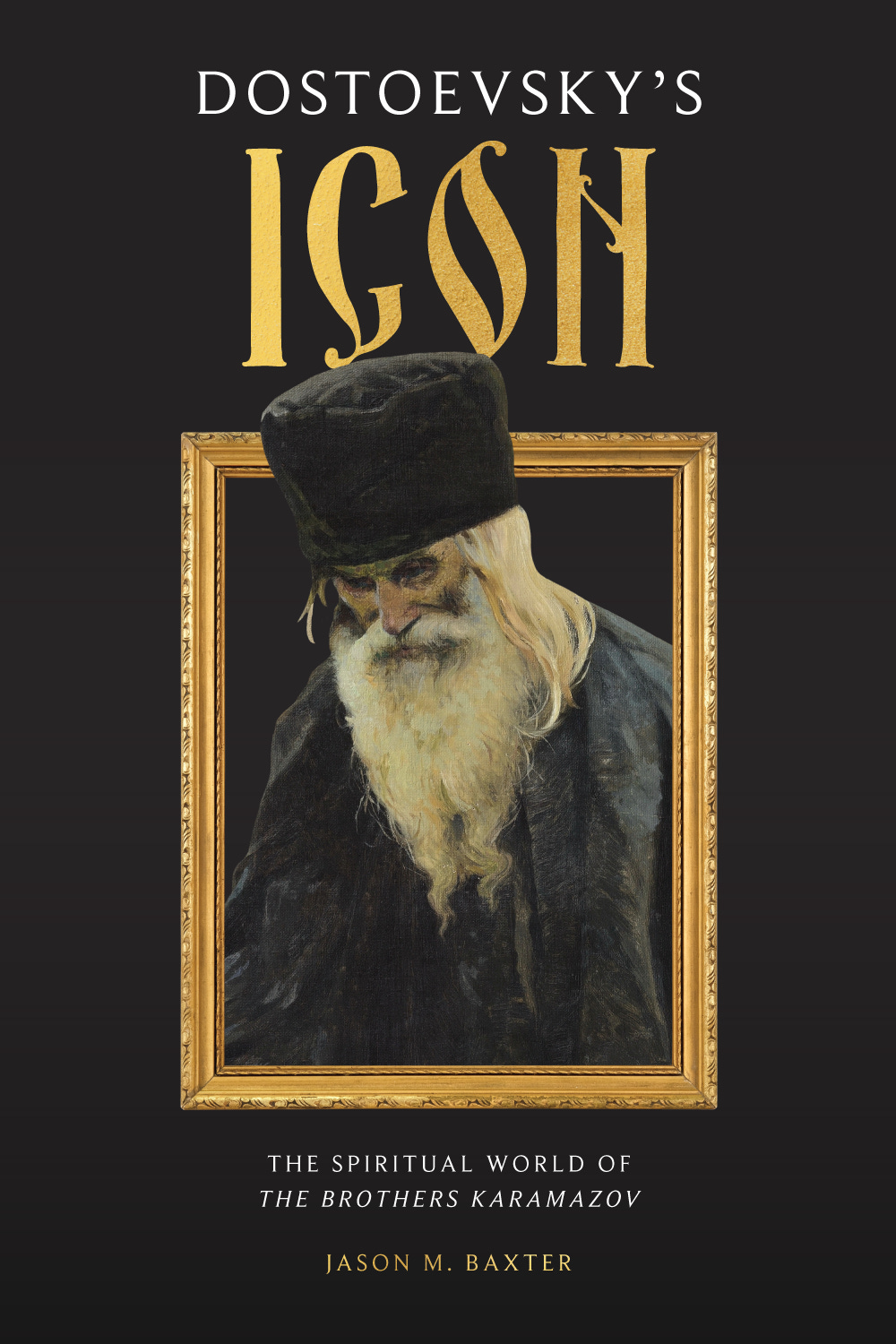
Already in his Brothers Karamazov, published between January 1879 and November 1880, Fyodor Dostoevsky’s character, known as the Mysterious Visitor, prophetically proclaims that our world has entered into what he ominously called a “period of isolation” (BK, 426).[1] When the newly converted Zossima asks for clarification from his interlocutor, the Mysterious Visitor explains:
“Why, the isolation that prevails everywhere, above all in our age—it has not fully developed, it has not reached its limit yet. For every one strives to keep his individuality as apart as possible, wishes to secure the greatest possible fullness of life for himself; but meantime all his efforts result not in attaining fullness of life but self-destruction, for instead of self-realization he ends by arriving at complete solitude. All mankind in our age have split up into units, they all keep apart, each in his own groove; each one holds aloof, hides himself and hides what he has, from the rest, and he ends by being repelled by others and repelling them. He heaps up riches by himself and thinks, ‘How strong I am now and how secure,’ and in his madness he does not understand that the more he heaps up, the more he sinks into self-destructive impotence. For he is accustomed to rely upon himself alone and to cut himself off from the whole; he has trained himself not to believe in the help of others, in men and in humanity, and only trembles for fear he should lose his money and the privileges that he has won for himself. Everywhere in these days men have, in their mockery, ceased to understand that the true security is to be found in social solidarity rather than in isolated individual effort. But this terrible individualism must inevitably have an end, and all will suddenly understand how unnaturally they are separated from one another” (BK).
Despite the fact that everyone “strives” for as great a share of “fullness of life” as possible, we do so as individuals, as consumers in competition with one another, and we are thus “separated from one another.”
I was experiencing all this, first hand, down in Florida. It was a Crisis of Beauty and a Crisis of Loneliness.
And I’m going to write about all of that over the course of the summer.
When I read the story of my adventures in Florida to my kids, on a lazy Sunday morning twenty-five years after the experience, they were looking at me with gleaming eyes:
“Well, Dad, how much did you make?”
“$1,000.”
“What? But that’s nothing!”
“I know. The baseball coaches took advantage of us. You only made a lot of money if you stole, but I reported everything we sold.”
“Oh.”
And yet, while down there, I think I might have found the Well at the End of the World, which issues forth waters without price.
[1] Fyodor Dostoevsky, The Brothers Karamazov, trans. Constance Garnett (Word on Fire Classics, 2025), 426. All quotations of BK throughout the book are from this edition.